
The steps to becoming a plumber in Victoria are fairly straightforward. The process is similar for other trades, such as becoming a carpenter or electrician. Here we walk you through the process of becoming a plumber, and what sort of work plumbers do.
To ensure the plumbing industry continues to grow in a safe and beneficial way, the plumbing industry is regulated. In Victoria, the government regulator is the Victorian Building Authority (VBA), they ensure all practitioners (plumbers) are licensed and registered. To become a plumber, all learners, including apprentices, must train under the supervision of a VBA licensed plumber.
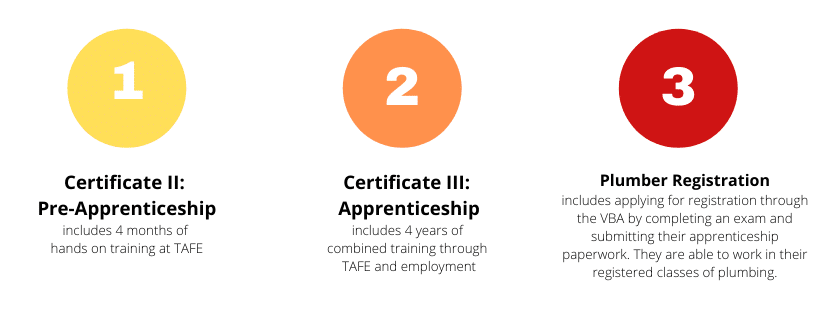
There are three main steps in becoming a plumber, two types of qualified plumbers and three classes of plumbing work.
Step 1: Pre- Apprenticeship
The pre-apprenticeship is a short course (usually around 16 weeks full time) that provides the basic skills and training in the plumbing field. This includes things like basic welding, sheet metal, roofing, drainage, sanitary, water and gas principles. Students can also seek work experience opportunities to gain first-hand knowledge and experience of the plumbing industry which will better prepare you for a full-time apprenticeship.
Completing a pre-apprenticeship is preferred by most employers when looking to take on new apprentices.
Step 2: Apprenticeship
Becoming a plumber requires a 4-year apprenticeship, during which time you have to be employed in an apprenticeship arrangement. As part of this, you will complete the Certificate III in Plumbing which is a nationally accredited qualification. If you want to be an apprentice, you have to find a licensed plumbing practitioner under whom you can do your apprenticeship. An Apprenticeship Network provider or Group Training Organisation in your area can assist you with finding a host employer and starting your apprenticeship.
Step 3: Registration
When the apprenticeship is completed, you must sit an exam and submit your completed apprenticeship paperwork to the Victorian Building Authority. If you are successful, you will be supplied a registration card with a practitioner number. You will be able to work across the main classes of plumbing, depending on what you focused on in your apprenticeship.
| Description | Registered Plumber | Licensed Plumber |
|---|---|---|
| Is a qualified plumber | ✅ | ✅ |
| Can work in main classes of plumbing | ✅ | ✅ |
| Can work in specialised classes of plumbing | ✅ | ✅ |
| Has public liability insurance | ✅ | |
| Can supervise apprentices | ✅ | |
| Can sign compliance certificates | ✅ |
Types of plumbing work is divided into classes: main class, specialised class, and restricted class.
Registered and licensed plumbers can work in as many of the main classes as they are trained in during their apprenticeship.
To work in a specialised class, registered and licensed plumbers are required to complete additional qualifications.
Restricted Class plumbers are able to only carry out a limited and specific range of plumbing work. Unlike registered plumbers, who can carry out gas work one day and roofing the next, restricted class plumbers can only work in their specific field of plumbing.
Plumbing is a diverse career that can include heavy-lifting, digging, problem solving and travel from site to site. It’s also a customer-facing role, as plumbers need to effectively explain the issue to customers and how they are going to fix it. It’s a versatile field, with lots of opportunities for growth, such as upskilling or running your own business. Plumbers have the flexibility to specialise in one type of plumbing or work across a wide range of jobs and locations.
If you’re good with your hands and are a people-person, becoming a plumber is a great prospective career path for you.